THE most remarkable ship we know about from the ancient world is
the Syrakousia - the Maid of Syracuse.
Despite some translations and reconstructions deciding the opposite, Syracousia was a sailing ship and not a galley. Even so, it is more than worthy of discussion here. She led, for example, a small flotilla of support ships which were mostly galleys.
Flipped Prof is an Italian 3D graphics team(?) who produce reconstructions of the ancient world. They look great but have some errors of detail.
Flipped Prof show here a reconstruction of Syrakousia as a galley with 3 tiers of oars.

The error is simply made, because the ancient Greek text is somewhat garbled, technical and difficult to understand if one knows little of ancient ships.
Having held the idea in mind for many years I finally decided that I had to make a model of this behemoth and try to make some sense of the ancient account.
SOURCES
The Syracousia was constructed in a special place and time which allowed for such futuristic, cutting- edge projects to be carried out.
Hieron the Second of Syracuse was a hellenistic ing who had access to great wealth and great technologists. Hieron started the First Punic War(264BC) on the Punic side but was obviously gifted in diplomacy for he ended it on the Roman side (241BC) and remained friendly with them until his death in 215BC. As if to demonstrate what a feat this was, within 4 year sof his death the romans had seen fit to sack Syracuse and swallow his kingdom.
Hieron II was admired and successful and wealthy. Hellenistic kings were supposed to give public displays of their wealth and excellence as a kind of public and religious duty. What would today be seen as wasteful junket would have been interpreted as a demonstration of how the gods smiled on the kingodom's ruler and therefore the kingdom and therefore each individual citizen. Big parades, tours and festivals were de rigeur for an Hellenistic king.
Hieron was fortunate enough to have a bevy of beautiful brains at his disposal. Hellenistic courts loved knowledge, fine arts natural sciences and engineering. Just as his predecessor, Dyonisius I, Hieron patronised the wise and clever. He was lucky enough to have the great Archimedes at the head of his brains trust and this combined with a penchant for shipbuilding led to the Syracousia.
We have an account, a detailed account, (but not wholly clear, dammit!) of the great ship. It comes, bizzarely enough, from a long and rambling work from the 3rd century AD known as 'The Philosopher-Gastronomes' (Deipnosophistae), by the Egyptian-Greek Athenaeus of Naucratis. In his work, which survives in incomplete form, Athenaeus manages to name-drop no less than 800 ancient authors and 2500 literary works. He is a mine, (some might say a pile) of information about the ancient world.
Athenaeus, then, scratched an account of a work by Moschion who was an earlier writer. How early we do not know. He could also have been writing AD. But Moschion had knowledge of the Syracousia project and preserved it due to his delightful profession of 'paradoxographer'. His bag was to create the 'wierd tales' or 'stranger than fiction' pulp of his day.
Bored with scoffing for a while, the Philosopher-Gastronomes are treated to a lengthy morsel from Moschion which tells of how Archimedes was entrusted with a project to build the biggest and best grain freighter by Hieron II.
But the tall tale told for the delectation of the well-stuffed Hellenestic aesthetes has been a target for scepticism.
Dawe, Diggle and Page, in thier survey of the Greek epigram*, (p. 27) see the tale as an 'absurd yarn' - as absurd as their Dickensian assemblage of names, no doubt. Part of Moschion's account includes an epigram attributed to one 'Archimelus'.( Incidentally, we know sweet Fanny Adams about these two apart from their naming in Athenaeus.)Epigrams should be pithy, witty, ingenious and brief. They originated as tombstone inscriptions and memorials - our modern epitaph - where every letter cost money.
(Remember, 'Many archaic epitymbic epigrams are monostichs' A sentence I have vowed never to remember)
The problem Dawe, Diggle and Page have with the Syracousia epigram is that it lives up to none of these criteria. Get this.....
Who placed this monstrous mass upon the earth;
What master led it with untiring cables,
How was the deck nail'd to the mighty beams,
And with what axe did men the vessel form?
Surely it equals Aetna in its height,
Or any isle which rises from the sea
Where the Egean wave entwined foams
Amid the Cyclades; on either side
Its breadth is equal, and its walls alike.
Sure 'twas the giants' work, who hoped to reach
By such vast ladder to the heights of heaven.
Its topmast reaches to the stars; and hides
Its mighty bulwarks 'mid the endless clouds.
It holds its anchors with untiring cables,
Like those with which proud Xerxes bound the strait
Which between Sestos and Abydos foams.
A deftly carved inscription on the side
Shows what strong hand has launch'd it on the deep;
It says that Hiero, Hierocles' son,
The king of Sicily, pride of Dorian race,
Sends it a wealthy messenger of gifts
To the Aegean islands; and the God
Who rules the sea, great Neptune, convoys it
Safe o'er the blue and foaming waves to Greece.
You may notice that the 'epigram' is almost as large as the monster ship herself, but we must remember tha the form did get extended with time to allow flowery praises to be heaped on the subjects.
The judgement of DD&P is that this epigram is 'the most fatuous to have survived from the Alexandrian era'. Also . 'the hyperbole is grotesque'. Academics stamping their feet are never a pretty sight. DD&P conclude that the whole tale is a fanciful crock and dismiss it.
Unfortunately for the poetry-inclined latter-day dodgy legal firm, they were not naval architects nor were they sailors. Like Livy they write about nautical themes from the security of their bathtubs where the most complex vessel in sight is a plastic duck.
DD&P used a naval expert upon which to base their judgement. The one they chose was the intrepid, and impressive Cecil Torr. I will devote a whole blog page to Cecil Torr. He is one of my favourite writers and researchers on classical war galleys and ancient nautical topics in general, not to mention ancient Greek music. To an Englishman he also has to his credit the publication of one of the most profoundly English books ever. Ranking with Tristram Shandy. But that was nothing to do with Syracousia. The point about Cecil Torr is that he is rather dead. Even in 1981 when DD&P published their tome he was long gone.Cecil's feet failed to retain their wooden enfurbishments in 1928. Torr's classic ' Ancient Ships' was published in 1894. DD&P missed out on almost a hundred years of research, discovery and debate and the birth of maritime archaeology. They dismiss Syracousia as an absurd yarn on the basis of an earlier generation's knowledge of ancient shipping. Apart from that, they were probably correct about the poem's artistic merits....
The facts that we have from Moschion via Athenaeus are fabulous but can be shown to lie within the technical capabilities of the classical world.
The Nemi ships, Caligula's pleasure barges proved such colossi were constructed by the ancients. (may the German army be ever cursed for burning them!). Accounts of the Ptolemies' massive Nile-cuisers - Thalamegoi - back the concept up. Many authors have pored over the after dinner tale - probbly often after dinner - and worked out that Syracousia lies well within the realm of capability for men of the calibre of Archimedes.
I wanted to build a model of this thing and now I will lay out how I proceeded in the following blog entries.
HELLENISTIC FLAT TOP ?
If the Hellenistic world had aeroplanes they could have landed on this thing ! With the ingenuity of the modern era's early naval fliers a seaplane using a combination ofI Icarus' wings (with perfected non-melting glue!) Heron's jet engine, the torsion devices invented for artillery etc. could have allowed a microlite type thingy to have been produced and operated from a Syracousia type vessel, more than 50 metres long and with a flat top.
Just a crazy thought which I will not pursue further ! ;)
(The silver lining in the cloud of Covid19 is that I have time for this .... More follows...)
*Further Greek Epigrams. Cambridge 1981
the Syrakousia - the Maid of Syracuse.
 |
| Syracousia as reconstructed in 1798. |
Despite some translations and reconstructions deciding the opposite, Syracousia was a sailing ship and not a galley. Even so, it is more than worthy of discussion here. She led, for example, a small flotilla of support ships which were mostly galleys.
Flipped Prof is an Italian 3D graphics team(?) who produce reconstructions of the ancient world. They look great but have some errors of detail.
Flipped Prof show here a reconstruction of Syrakousia as a galley with 3 tiers of oars.
 |
| Youtube HERE |

The error is simply made, because the ancient Greek text is somewhat garbled, technical and difficult to understand if one knows little of ancient ships.
Having held the idea in mind for many years I finally decided that I had to make a model of this behemoth and try to make some sense of the ancient account.
SOURCES
The Syracousia was constructed in a special place and time which allowed for such futuristic, cutting- edge projects to be carried out.
Hieron the Second of Syracuse was a hellenistic ing who had access to great wealth and great technologists. Hieron started the First Punic War(264BC) on the Punic side but was obviously gifted in diplomacy for he ended it on the Roman side (241BC) and remained friendly with them until his death in 215BC. As if to demonstrate what a feat this was, within 4 year sof his death the romans had seen fit to sack Syracuse and swallow his kingdom.
 |
| Hieron II lived until 92. Barely a bad word written about him (enemies all very dead) |
 |
| Vulgar to Romans but essential to Hellenistic royalty |
Hieron was fortunate enough to have a bevy of beautiful brains at his disposal. Hellenistic courts loved knowledge, fine arts natural sciences and engineering. Just as his predecessor, Dyonisius I, Hieron patronised the wise and clever. He was lucky enough to have the great Archimedes at the head of his brains trust and this combined with a penchant for shipbuilding led to the Syracousia.
 |
| We shall see, Carl, we shall see.... |
Athenaeus, then, scratched an account of a work by Moschion who was an earlier writer. How early we do not know. He could also have been writing AD. But Moschion had knowledge of the Syracousia project and preserved it due to his delightful profession of 'paradoxographer'. His bag was to create the 'wierd tales' or 'stranger than fiction' pulp of his day.
 |
| Just now we stick to construction rather than seduction... |
But the tall tale told for the delectation of the well-stuffed Hellenestic aesthetes has been a target for scepticism.
 | ||
| THE ENTERTAINMENT PUT ME OFF MY CUSTARD AND LARK-TONGUES...FOR A WHILE. | .WHY COULDWE NOT JUST HAVE STORIES AND POEMS ABOUT SHIPS INSTEAD ? |
Dawe, Diggle and Page, in thier survey of the Greek epigram*, (p. 27) see the tale as an 'absurd yarn' - as absurd as their Dickensian assemblage of names, no doubt. Part of Moschion's account includes an epigram attributed to one 'Archimelus'.( Incidentally, we know sweet Fanny Adams about these two apart from their naming in Athenaeus.)Epigrams should be pithy, witty, ingenious and brief. They originated as tombstone inscriptions and memorials - our modern epitaph - where every letter cost money.
(Remember, 'Many archaic epitymbic epigrams are monostichs' A sentence I have vowed never to remember)
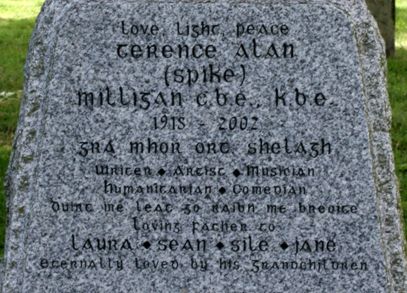 |
| 'I told you I was Milligan!' |
The problem Dawe, Diggle and Page have with the Syracousia epigram is that it lives up to none of these criteria. Get this.....
Who placed this monstrous mass upon the earth;
What master led it with untiring cables,
How was the deck nail'd to the mighty beams,
And with what axe did men the vessel form?
Surely it equals Aetna in its height,
Or any isle which rises from the sea
Where the Egean wave entwined foams
Amid the Cyclades; on either side
Its breadth is equal, and its walls alike.
Sure 'twas the giants' work, who hoped to reach
By such vast ladder to the heights of heaven.
Its topmast reaches to the stars; and hides
Its mighty bulwarks 'mid the endless clouds.
It holds its anchors with untiring cables,
Like those with which proud Xerxes bound the strait
Which between Sestos and Abydos foams.
A deftly carved inscription on the side
Shows what strong hand has launch'd it on the deep;
It says that Hiero, Hierocles' son,
The king of Sicily, pride of Dorian race,
Sends it a wealthy messenger of gifts
To the Aegean islands; and the God
Who rules the sea, great Neptune, convoys it
Safe o'er the blue and foaming waves to Greece.
You may notice that the 'epigram' is almost as large as the monster ship herself, but we must remember tha the form did get extended with time to allow flowery praises to be heaped on the subjects.
The judgement of DD&P is that this epigram is 'the most fatuous to have survived from the Alexandrian era'. Also . 'the hyperbole is grotesque'. Academics stamping their feet are never a pretty sight. DD&P conclude that the whole tale is a fanciful crock and dismiss it.
Unfortunately for the poetry-inclined latter-day dodgy legal firm, they were not naval architects nor were they sailors. Like Livy they write about nautical themes from the security of their bathtubs where the most complex vessel in sight is a plastic duck.
 |
| Now we can explain the most complex ancient ship ..Oh I can anyway because I built it..... |
The facts that we have from Moschion via Athenaeus are fabulous but can be shown to lie within the technical capabilities of the classical world.
The Nemi ships, Caligula's pleasure barges proved such colossi were constructed by the ancients. (may the German army be ever cursed for burning them!). Accounts of the Ptolemies' massive Nile-cuisers - Thalamegoi - back the concept up. Many authors have pored over the after dinner tale - probbly often after dinner - and worked out that Syracousia lies well within the realm of capability for men of the calibre of Archimedes.
 |
| Queus to see ships excavted at Nemi in 1932 |
 |
| Caligula's pleasure-ships : 70 and 73 metres long. with beam 30 and 24 metres |
I wanted to build a model of this thing and now I will lay out how I proceeded in the following blog entries.
HELLENISTIC FLAT TOP ?
If the Hellenistic world had aeroplanes they could have landed on this thing ! With the ingenuity of the modern era's early naval fliers a seaplane using a combination ofI Icarus' wings (with perfected non-melting glue!) Heron's jet engine, the torsion devices invented for artillery etc. could have allowed a microlite type thingy to have been produced and operated from a Syracousia type vessel, more than 50 metres long and with a flat top.
 |
| HUMAN FLIERS HERE |
(The silver lining in the cloud of Covid19 is that I have time for this .... More follows...)
*Further Greek Epigrams. Cambridge 1981